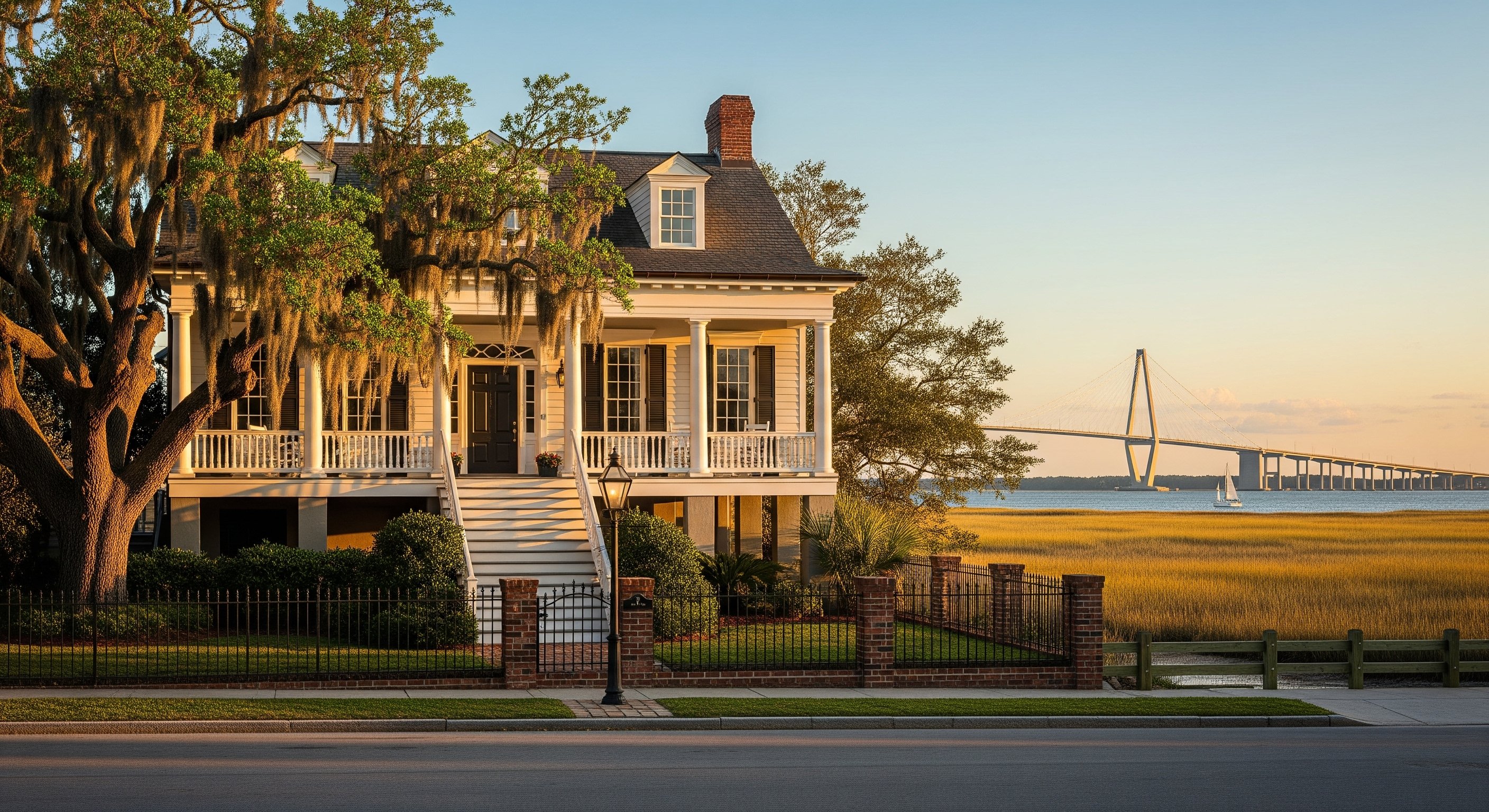
Is Mount Pleasant one market or two? If you have toured both Old Village and Park West, you know the answer. You are looking at very different micro-markets with distinct pricing, timelines, and offer norms. In this guide, you will learn exactly how we define Upper and Lower Mount Pleasant, what typically drives price and speed in each area, and how to tailor your strategy as a buyer or seller. Let’s dive in.
How we define Upper vs Lower
To keep comparisons consistent, this article uses a clear, repeatable split:
- Lower Mount Pleasant: Everything south of I‑526 and west of the Isle of Palms Connector (SC‑517), anchored by the Cooper River and Charleston Harbor. This includes Old Village and Old Mount Pleasant, Shem Creek and the Coleman Boulevard corridor, Patriots Point, Hobcaw Point, I’On, The Groves, Bayview Acres, and Wakendaw.
- Upper Mount Pleasant: All remaining neighborhoods within the Town of Mount Pleasant, including areas north of I‑526 or east of SC‑517. This includes Long Point, Seaside Farms, Hamlin, Oyster Point, Charleston National, Dunes West, Park West, Riverside, and Carolina Park.
Why the line matters: the border you use will change medians, price per square foot, inventory counts, and days on market. Always compare the same two areas over the same date ranges.
What the data should compare
When you pull reports for each submarket, measure the same items over a rolling 12 months and a rolling 3 months to capture seasonality:
- Active listings and new listings per month
- Median and mean sale price
- Median and mean price per square foot
- Median days on market
- Months of inventory and absorption rate
- Median list‑to‑sale price ratio
- Product mix by type: single‑family, townhouse, condo
- Share of new construction versus resale
- Median lot size and median year built
- Financing mix: cash, conventional, FHA/VA where available
- Investor share and owner‑occupant share where available
- Flood zone exposure by share of listings in FEMA Special Flood Hazard Areas
Use consistent property filters for both areas. Consider separating ultra‑luxury waterfront and historic Old Village sales so they do not mask trends for typical single‑family homes.
What usually differs by area
Proximity premium in Lower
Lower Mount Pleasant sits closest to the Cooper River, Shem Creek, and downtown Charleston access. Buyers often pay a premium for walkable dining, marina access, and shorter commutes. Expect higher price per square foot, faster contract times on well‑priced homes, and tighter inventory. Many homes are on smaller lots with established streetscapes, and you will see a mix of renovated properties and architect‑led rebuilds.
Newer homes and space in Upper
Upper Mount Pleasant features newer master‑planned communities and recent construction. You will often find larger lots, community amenities, and modern floor plans. Absolute sale prices can be high for large homes, yet price per square foot is often lower than in Lower Mount Pleasant. Inventory is usually deeper, with slightly longer days on market and more opportunities to compare similar models and builders.
Product mix differences
- Lower tends to include more condos, townhomes, and smaller‑lot single‑family homes near mixed‑use corridors.
- Upper skews toward single‑family detached homes, with ongoing builder activity and neighborhood amenity centers.
Flood and insurance exposure
Flood zone exposure is more common near the waterfront and Shem Creek in Lower Mount Pleasant. This can influence insurance costs and underwriting requirements. Upper areas have less direct waterfront exposure, but localized stormwater and elevation still matter. Review FEMA mapping and elevation certificates early in your process.
Commute and connectivity
Lower Mount Pleasant offers shorter drive times to downtown Charleston and quick access to marinas and waterfront parks. Buyers in Upper Mount Pleasant often trade a longer commute for more space, newer construction, and community amenities.
School zones and demand
Attendance boundaries change over time and can affect buyer decision‑making. Review current Charleston County School District attendance maps when evaluating a specific property. Use neutral, up‑to‑date boundary information rather than assumptions.
Strategy if you are buying
Buying in Lower Mount Pleasant
- Be prepared for higher price per square foot and faster timelines on renovated or well‑located listings.
- Strengthen your offer with clear terms: proof of funds or a strong pre‑approval, shorter decision windows, and thoughtful contingencies.
- If waterfront or near tidal areas, request elevation certificates and obtain flood quotes early to understand total ownership cost.
- Review renovation histories and permits. Updated systems and recent structural improvements can justify premiums.
Buying in Upper Mount Pleasant
- Compare builder specs, warranties, and HOA fees across similar plans. New construction can create leverage on timing, concessions, or closing costs.
- Evaluate total commute time and access to key corridors at peak hours.
- If you prefer resale, look for homes with meaningful upgrades that compete well with nearby new builds.
- Use recent neighborhood comps and price per square foot trends to avoid overpaying for cosmetic features.
Strategy if you are selling
Selling in Lower Mount Pleasant
- Price to the last 30 to 90 days of closed comps in your micro‑pocket, not just the broader ZIP code. Proximity can shift values quickly.
- Lead with presentation. Professional photography, crisp staging, and lifestyle storytelling about walkability, marinas, and waterfront parks can lift buyer interest.
- Prepare your disclosure package. Elevation certificates, flood information, recent permits, and insurance details reduce friction and build trust.
- Expect concentrated showing activity early. A strong first week often sets the tone for price and terms.
Selling in Upper Mount Pleasant
- You may compete with similar floor plans and nearby new construction. Differentiate with upgrades, outdoor living, and move‑in readiness.
- Pre‑inspection and targeted repairs can speed negotiations in areas with more active inventory.
- Be ready to address HOA fees, amenity access, and rental rules clearly, since buyers model monthly affordability.
- Watch list‑to‑sale ratios and months of inventory in your neighborhood. Adjust price or incentives if absorption slows.
Flood, insurance, and due diligence
Flood status and elevation can materially affect financing and insurance. For any property, confirm flood zone, base flood elevation, and recent claims history. Ask your insurer for quotes that reflect the current policy landscape and any mitigation features. For new construction, review local elevation and building requirements so you understand long‑term resilience and cost of ownership.
What to watch this season
- Median days on market for each submarket, plus the 3‑month trend line
- Months of inventory by price band, which signals shifting leverage
- Median list‑to‑sale price ratio, especially the share of sales over asking
- The mix of new construction versus resale, which can change buyer options
- Cash share of closed sales, which influences appraisal risk and speed
Pricing and offer playbook
- Use both price per square foot and closed comparable sales. Price per square foot helps normalize size, while closed comps reflect what buyers actually paid.
- Segment by property type and location. Historic Old Village, deepwater, and harbor‑view homes are a distinct segment. Analyze them separately from typical single‑family resales.
- Match time frames. Compare the same 12‑month and 3‑month windows in both submarkets to avoid seasonal noise.
- Align terms to the area. Lower often rewards speed and clean terms. Upper often rewards patience, comparisons, and well‑timed negotiation.
How we can help
If you want a clear, current read on your specific address or search, we can prepare a micro‑market snapshot that mirrors the split above. You will receive MLS‑backed comps, price per square foot analytics, neighborhood‑level absorption, and a flood‑zone overlay, plus a plan for pricing, presentation, or offer terms that fits your goals.
Ready to move with confidence in either market? Connect with Coastal Luxury Homes Real Estate to Schedule a Private Consultation.
FAQs
What is the boundary between Upper and Lower Mount Pleasant?
- In this guide, Lower is south of I‑526 and west of the Isle of Palms Connector, centered on Old Village, Shem Creek, and the Coleman Boulevard corridor; Upper is everything else within town limits.
How do prices usually differ between Upper and Lower?
- Lower often carries a proximity premium reflected in higher price per square foot, while Upper can offer more space and newer homes at a lower price per square foot, though large new builds can have high total prices.
How long do homes take to sell in each area?
- Lower homes that are well priced and well presented often go under contract faster, while Upper areas typically have deeper inventory and slightly longer timelines; check current median days on market for both.
Do buyers pay over asking in Lower Mount Pleasant?
- In competitive pockets near Old Village and Shem Creek, some homes close at or above asking when priced well; confirm the latest list‑to‑sale ratios and the share of over‑ask closings for your price band.
How does flood risk affect buying near the waterfront?
- Flood zones and elevation can impact insurance costs and financing. Request elevation certificates and quotes early, and factor total ownership cost into your offer.
Should I price by price per square foot or comps?
- Use both. Price per square foot helps compare size across homes, but recent closed comparables in the same micro‑location should carry more weight for final pricing.