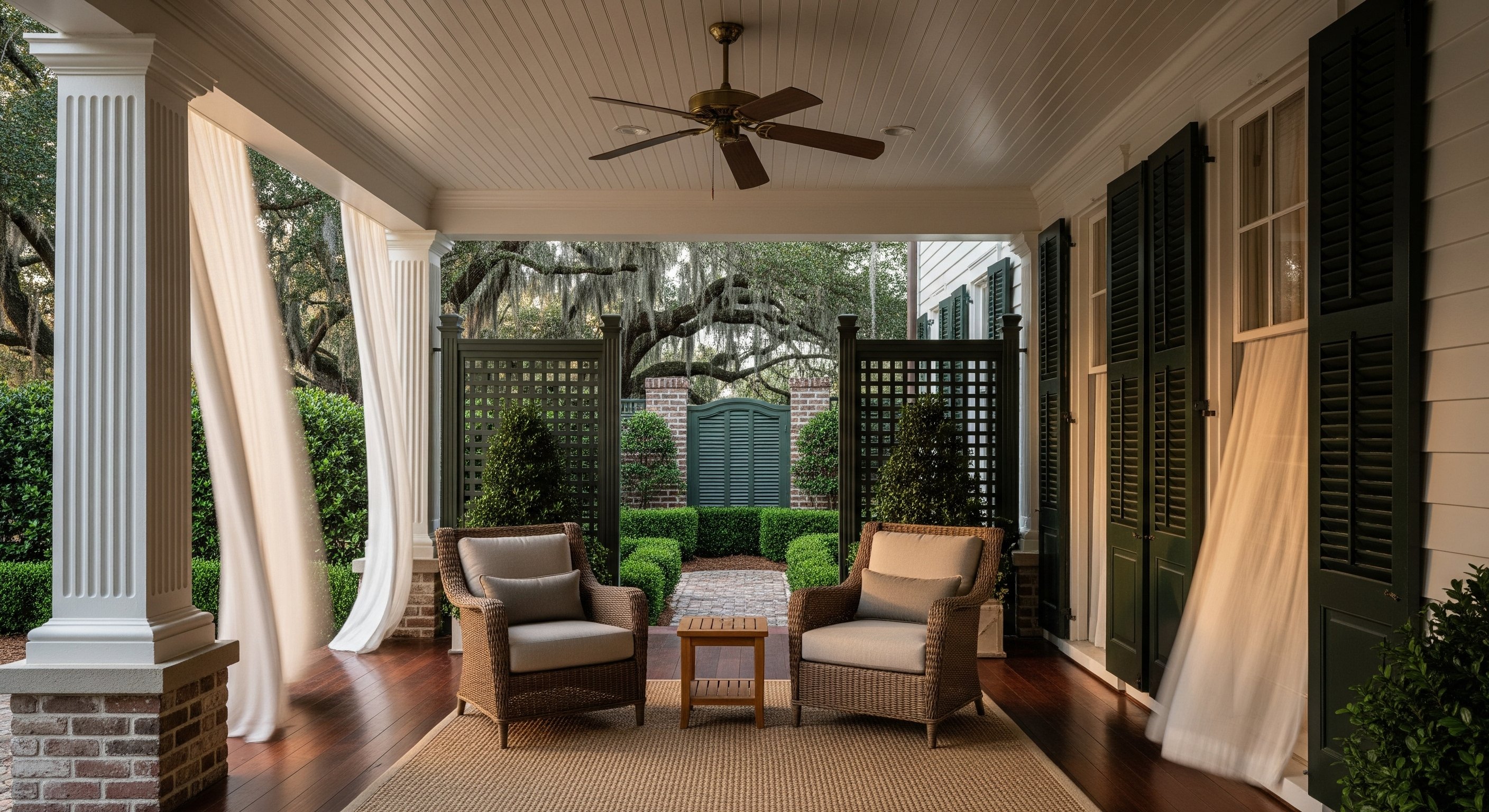
Hot afternoon sun, curious street views, and no-see-ums can turn a beautiful Charleston piazza into space you avoid. You want shade, privacy, and those famous sea breezes without losing the historic character that makes your home special. In this guide, you’ll learn practical ways to tune your piazza for comfort and curb appeal while staying aligned with local preservation expectations. Let’s dive in.
Why piazzas work in Charleston
Charleston’s classic piazza sits along the long side of the house to catch breezes and filter harsh sun. That orientation lets rooms open to shaded outdoor living and helps air flow through interiors. In our humid subtropical climate, these moves reduce heat gain and make summer evenings livable. Keeping that intent in mind will guide every design choice you make.
Set your goals and plan approvals
Before you jump into materials, set clear goals. Most homeowners aim to block late-afternoon sun, add privacy from street or neighbors, keep airflow strong, and preserve the home’s historic profile. If your home is in a regulated historic district, visible changes often require review by the Board of Architectural Review. Simple, reversible solutions are usually easier to approve than permanent alterations.
Control sun with louvered shutters
Louvered shutters are time-tested in Charleston. They let you modulate sun and privacy while keeping air moving.
- Choose operable louvers so you can tilt for changing sun angles and views.
- Match the size, rail profiles, and proportions to local historic examples for a natural fit.
- Consider materials suited to our climate. Rot-resistant woods like cypress remain appropriate when well painted and maintained. Engineered wood, cellular PVC, or stabilized composites can lower maintenance if profiled accurately. In salt air locations, anodized aluminum louvers offer durability but should be detailed carefully to read as traditional from the street.
- For extra control, integrate operable louvers into doors or transoms between the piazza and interior to boost cross-ventilation.
Smart screening that breathes
You can enjoy insect control and privacy without closing in the porch.
- Retractable or roll-down screens stay out of sight when you want an open look, then deploy at dusk.
- Removable framed panels, set behind the balustrade, offer a reversible approach and can be taken out seasonally.
- If you prefer full screening, preserve column spacing and sightlines so the piazza still feels open.
- Mesh matters. Fiberglass provides good visibility. Stainless steel or bronze stands up better to corrosion and wears beautifully over time. Finer meshes catch more insects but may slightly reduce airflow.
- Target specific sides. Screen the windward or insect-prone faces and leave others open to capture prevailing breezes.
Shade beyond shutters
Deep porch depth does much of the shading work. To handle stubborn morning or late-day sun, consider reversible add-ons.
- Use retractable shades or an awning that complements your home’s colors and trim. Keep the installation light and visually quiet.
- Layer landscape solutions. Deciduous vines on a trellis and shade plantings can cool the space and soften views while lowering reflected heat. Select salt-tolerant, low-maintenance species suited to the coastal Lowcountry.
Light for safety and character
Evening use calls for comfortable, period-appropriate light that respects neighbors and the night sky.
- Pick lanterns or sconces scaled to your columns and doors. Historic silhouettes with modern LED internals give you the best of both worlds.
- Choose warm white LEDs around 2700–3000K. They flatter wood finishes and painted colors and feel more historic.
- Use shielded or downward-directed fixtures to minimize glare. Add dimmers, timers, or motion-activated low-level pathway lights to fine-tune ambiance and efficiency.
- If original fixtures exist, retain and repair when possible, and document any replacements.
Move air with fans and openings
Air movement dramatically improves comfort on humid evenings.
- Add ceiling fans sized to your porch bay. Select corrosion-resistant hardware and blades suited to outdoor coastal conditions.
- Encourage cross-ventilation by using operable transoms or doors between piazza and rooms. When conditions are favorable, you can cool the house naturally.
- Where breezes matter most, choose screened openings rather than fixed glazing.
Materials that stand up to salt and humidity
Coastal conditions are beautiful and tough on finishes.
- Use high-quality, breathable exterior paints and expect a regular repaint cycle.
- Specify stainless steel or other corrosion-resistant fasteners and hardware.
- Inspect wood regularly and address rot quickly. Lubricate operable louvers and screen mechanisms so they work when you need them.
Approvals, documentation, and next steps
A thoughtful process avoids surprises and speeds approval.
- Document existing conditions with photos and simple measurements.
- Check in early with the preservation office about what needs review. Bring sketches, samples, and a clear explanation of visibility and reversibility.
- If you plan heavy screening systems, fans, or lighting, verify framing, anchorage, and electrical needs. Favor attachment methods that minimize impact to historic fabric.
Maintenance made simple
A small routine keeps your piazza looking great and working hard.
- Inspect annually for mildew, paint failure, and hardware corrosion.
- Clean screens seasonally to restore airflow and clarity.
- Repaint on a schedule suited to your exposure. Replace damaged wood promptly.
- Lubricate louver hardware and retractable screen tracks to prevent sticking.
When to DIY and when to hire
You can handle simple tasks like cleaning screens, maintaining hardware, and repainting small areas. For visible changes, structural attachments, and electrical work, hire contractors experienced with historic homes and coastal detailing. Their know-how helps you avoid moisture traps, match profiles correctly, and navigate approvals smoothly.
Bring it together
A well-tuned Charleston piazza filters sun, frames your view, and draws in steady breezes. With operable louvers, selective screening, warm lighting, and durable materials, you can elevate comfort and preserve the historic spirit that defines your home. If you want guidance on which upgrades will add the most day-to-day value and market appeal, we are here to help.
Ready to talk through your options or how these upgrades might affect resale? Schedule a Private Consultation with Coastal Luxury Homes Real Estate.
FAQs
Will screening make my piazza feel closed in?
- Thoughtful, reversible approaches like retractable screens or panels set behind the balustrade keep sightlines open and preserve airflow while keeping insects out.
How can I add privacy without losing breezes?
- Combine adjustable louvered shutters with partial screening on key sides, then use ceiling fans to keep air moving when louvers are angled for privacy.
What materials perform best near salt air?
- Rot-resistant woods like cypress, quality engineered composites, and stainless steel fasteners hold up well in humid, coastal conditions when properly detailed and painted.
What color temperature should my porch lighting be?
- Warm LEDs around 2700–3000K give a comfortable, historic look, flatter finishes, and reduce the harshness common with cooler lamps.
Do I need approval to add shutters, screens, or lighting?
- If your home is in a regulated historic area, visible changes often require review. Engage the preservation office early and propose reversible, well-detailed solutions.